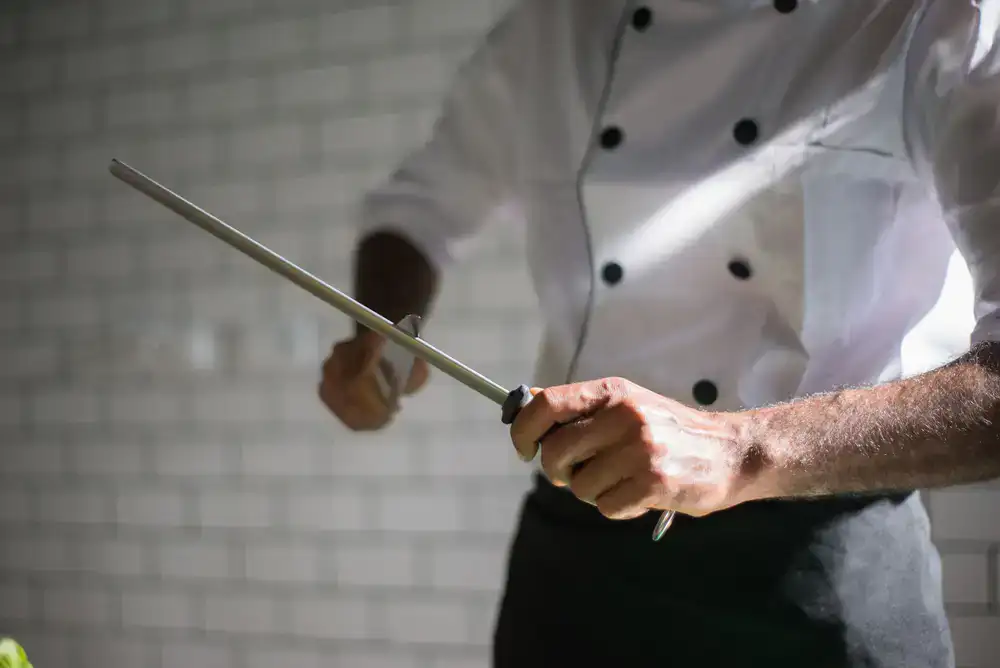
Honing
Honing simply pushes the microscopic edge of the blade back into vertical alignment. It does not remove metal. Use a ceramic or steel rod regularly before cooking to keep a relatively sharp knife performing smoothly.
Weekly RoutineA sharp blade is only as good as the care it receives. Discover simple, daily practices to keep your kitchen tools performing flawlessly year after year.
Shop Care Tools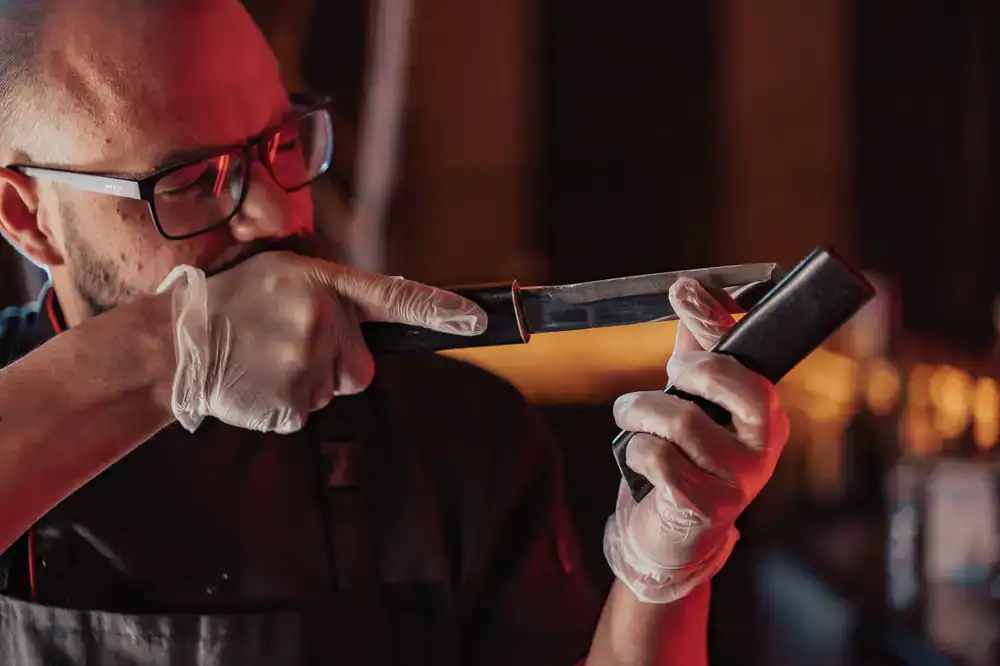
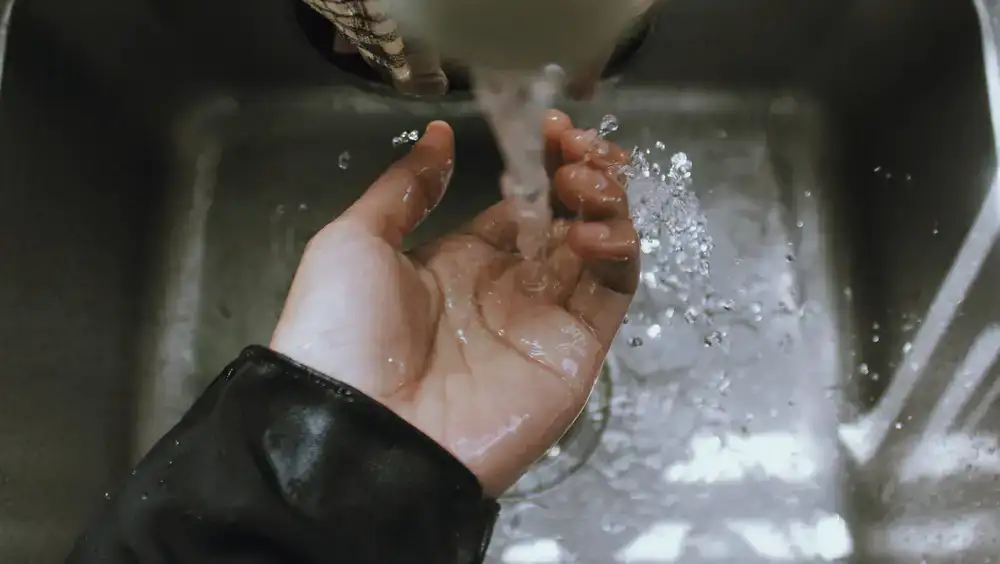
The most common damage to high-carbon and stainless blades occurs in the sink or the dishwasher. Harsh detergents, prolonged moisture, and rattling against other utensils can dull edges and promote rust.
Understanding the difference between realigning an edge and creating a new one is critical for knife longevity.
Honing simply pushes the microscopic edge of the blade back into vertical alignment. It does not remove metal. Use a ceramic or steel rod regularly before cooking to keep a relatively sharp knife performing smoothly.
Weekly Routine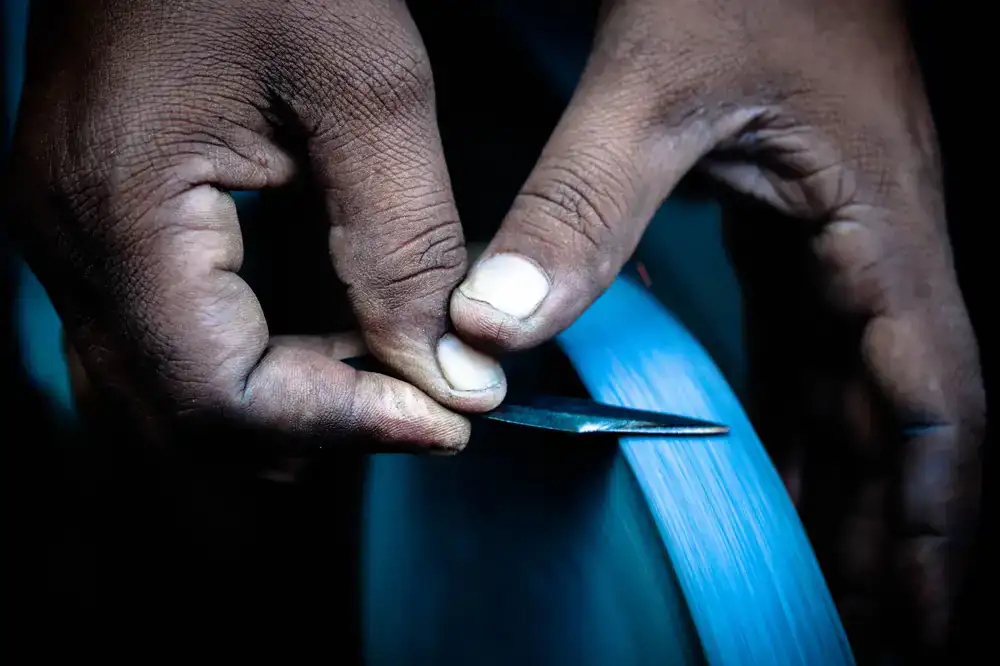
Sharpening grinds away material to create a brand new, acute edge. This should only be done on high-quality whetstones when the blade feels truly dull and honing no longer brings it back to life. Regular sharpening requires patience and proper technique.
Storing knives loose in a drawer guarantees dulling as blades clash against other utensils. Protect your investment by keeping edges isolated and secure.
The most sanitary and secure method. Ensures blades don't rest on their edges and allows air circulation.
Essential if drawer storage is your only option, or for safe transport when traveling.
Whether you have a chipped edge or just need advice on which whetstone grit to buy, our sharpening experts are ready to assist.